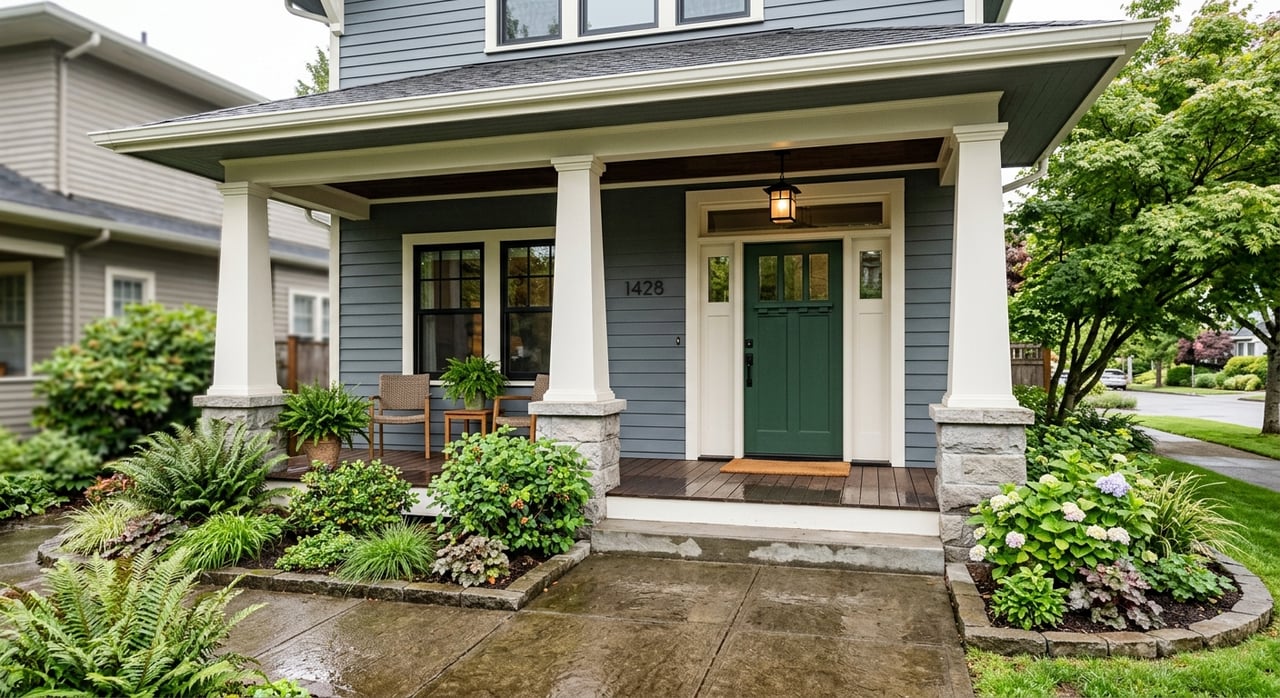
Buying Your First Home in Wallingford: What to Expect
July 9, 2026
July 9, 2026
Buying your first home in Seattle can feel like a tug-of-war between budget, location, and lifestyle. If Wallingford is on your list, you are probably drawn to its central location, lively streets, and easy access to parks and transit, but you may also be wondering whether the price tag makes sense for a first purchase. This guide will help you weigh the tradeoffs, understand what you are likely to find, and decide whether Wallingford fits your goals. Let’s dive in.
Wallingford sits north of Lake Union, west of the University District, east of Fremont, and south of Green Lake. According to Seattle’s historic resources survey, it is a centrally located neighborhood with one of the city’s best-known commercial districts along N 45th Street, plus smaller corner-store areas and a large stock of early 20th-century homes.
For many first-time buyers, that mix is a big part of the appeal. You get a neighborhood with established character, everyday convenience, and a location that connects well to other parts of Seattle.
If you want a neighborhood where you can run errands, grab a meal, and spend time outdoors without relying on your car for every trip, Wallingford checks a lot of boxes. The commercial district along N 45th Street gives the area an active, urban feel, while smaller neighborhood business nodes add convenience closer to home.
Outdoor access is another draw. Seattle Parks says Wallingford Playfield includes soccer fields, tennis courts, a play area, and wading pools, while Gas Works Park offers picnic areas, views, a play area, and direct access to the Burke-Gilman Trail.
That trail matters more than it might seem on paper. Seattle Parks describes the Burke-Gilman as a 27-mile multi-use route used by walkers, runners, cyclists, skaters, and commuters, which adds real day-to-day flexibility if you like to get around without driving.
Wallingford stands out for transit access by North Seattle standards. Nearby U District Station connects to Link service and multiple King County Metro routes, including 31, 32, 43, 44, 45, 48, 49, 70, 75, 79, 372, and 586.
Within the neighborhood, Route 44 connects Wallingford with Fremont, Ballard, and UW Station. Route 62 serves Wallingford at Stone Way N and N 45th Street, then continues to South Lake Union and downtown Seattle. Metro also lists Route 44 as Night Owl service, which can be helpful for late-night trips.
If walking matters to you, Redfin labels Wallingford as fairly walkable with a Walk Score of 85. Seattle Parks also notes that the Wallingford Steps connect N 34th Street with N Northlake Way, the Burke-Gilman Trail, and Gas Works Park, giving the area another useful pedestrian link.
The biggest question is usually not whether Wallingford is appealing. It is whether the housing options line up with your budget and space needs.
The answer for many first-time buyers is simple: you will likely find your entry point in an attached home, not a large detached house. That is especially true if you are trying to stay in a more approachable price range while still buying in Wallingford.
King County Assessor data for the Green Lake and Wallingford area shows that about 71% of homes were built before 1940. The same report says about 71% of the area is zoned for detached single-family residences, about 29% is zoned for higher-density uses, and townhome-style residences have grown steadily since the early 1990s.
That mix creates an interesting housing landscape. You will find plenty of older detached homes, but many are smaller than suburban buyers expect. The assessor reports that the typical single-family home in the area has about 1,374 square feet above grade, 1,667 square feet total, on a lot of roughly 4,100 square feet.
Wallingford is not usually the neighborhood buyers choose because it is a bargain. It is a neighborhood buyers choose because they value location, character, and convenience enough to pay more for them.
Redfin reports a median sale price of $1,197,597 over the last three months ending May 2026. It also reports homes selling in about 7 days, a median sale price per square foot of $569, a sale-to-list ratio of 100.6%, and 23.8% of homes selling above list price.
For a first-time buyer, those numbers suggest a market where you need to move quickly and stay realistic about competition. They also explain why many buyers start with condos or townhomes rather than detached homes.
Recent sales reinforce that point. Redfin’s recently sold data shows sales ranging from a $460,000 one-bedroom condo and a $500,000 two-bedroom condo to a $729,000 two-bedroom home, a $766,000 three-bedroom unit, a $937,500 condo, and a $1.285 million detached house.
Sometimes the best way to judge Wallingford is to compare it with nearby neighborhoods. Based on recent Redfin figures, Fremont’s median sale price was $949,681, Green Lake’s was $1,003,662, Ballard’s was $889,551, and the University District’s was $812,227.
That places Wallingford at the expensive end of the nearby North Seattle market. If your main priority is buying a detached home with more square footage at a lower price, Wallingford may feel like a stretch compared with some nearby options.
Wallingford can be a strong first-home choice if you are buying for lifestyle and location as much as square footage. It tends to fit buyers who want to stay close to central Seattle, value a walkable setting, and are open to an attached home or a smaller older house.
It may also be a fit if you expect to use transit often. Between nearby Link access, local bus routes, Night Owl service on Route 44, and trail connections, the neighborhood supports a less car-dependent routine better than many other areas.
The neighborhood profile adds context here. Seattle’s Wallingford snapshot shows 66.4% renter households, compared with 54.8% citywide, along with a median household income of $99,698 and a highly educated adult population. For buyers, that points to steady demand for condos and other attached housing types alongside owner-occupied homes.
Wallingford may not be the best first-home choice if your budget is tight and you need more space right away. The combination of older housing stock, strong competition, and high prices can make the neighborhood harder to enter, especially if you are set on a detached house.
It may also be a mismatch if you want a turnkey suburban-style home with a larger lot. In Wallingford, the housing stock tends to be older, lots tend to be smaller, and tradeoffs are common.
That does not make the neighborhood a bad choice. It just means you should go in with a clear understanding of what you are paying for and what you may be giving up.
Before you focus on listings, it helps to get honest about your priorities. Wallingford is usually a better fit when your answers lean toward location and convenience over maximum space.
Ask yourself:
If you answered yes to most of those questions, Wallingford may deserve a serious look.
For many first-time buyers, Wallingford is less about getting the biggest home for the money and more about buying into a well-located Seattle lifestyle. You are likely to find the best opportunities in condos, townhomes, and smaller homes rather than in large detached properties.
If that matches the way you want to live, Wallingford can be a smart and satisfying place to start. If you need more space or more pricing flexibility, it may make sense to compare Wallingford with nearby neighborhoods before making a final decision.
If you want help sorting through Wallingford versus other North Seattle options, Ryan Hoff offers thoughtful, local guidance to help you find the right fit for your first home.
Stay up to date on the latest real estate trends.
My goal is not just to complete a sale, but to make sure my clients are well-educated throughout the process. My clients' needs come first and always making sure that they are satisfied. Providing my knowledge of market conditions and real home prices equips a seller or buyer to make their own decisions without a second thought.