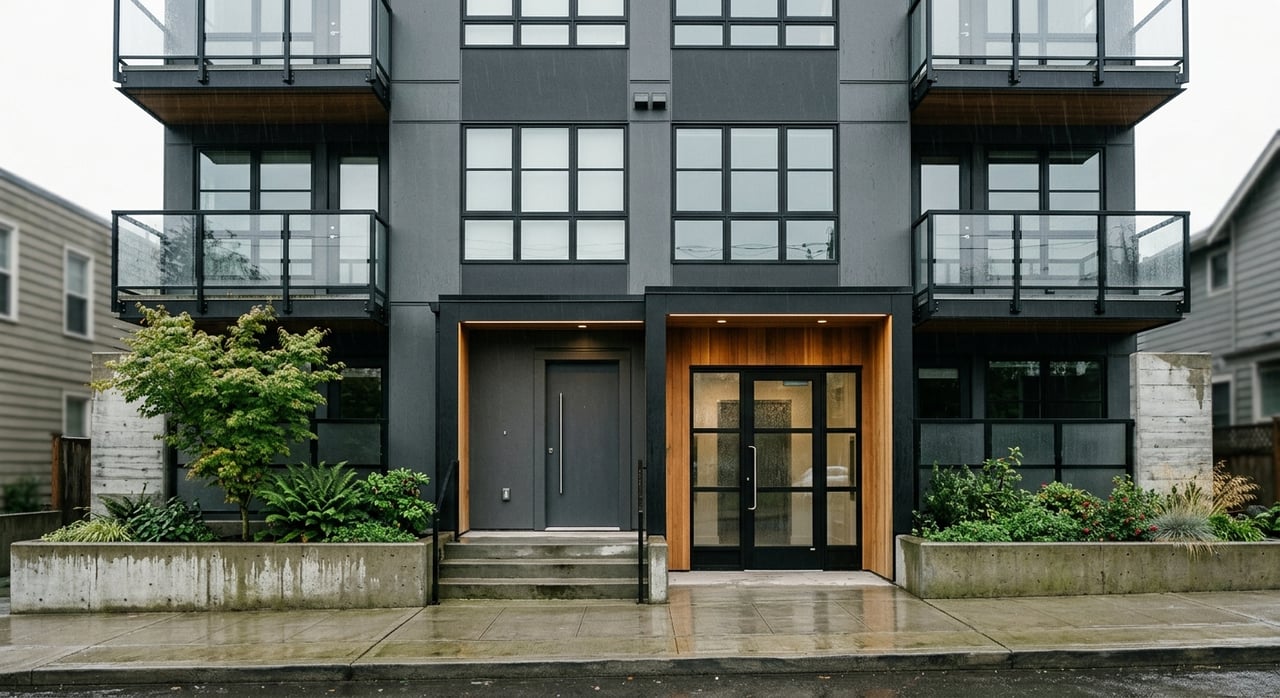
Ballard Seattle Condo vs Townhome: What Buyers Should Know
July 23, 2026
July 23, 2026
Wondering whether a Ballard condo or townhome is the better fit for your lifestyle and budget? You are not alone. In Old Ballard, the choice often comes down to more than square footage or monthly dues, especially when parking, maintenance, and historic-district rules can shape your day-to-day experience. This guide will help you compare your options, know what to review, and shop with more confidence. Let’s dive in.
Old Ballard draws buyers for its historic character, strong retail core, and walkable setting within one of Seattle’s regional centers. That mix can make condos and townhomes especially appealing if you want lower-maintenance living close to shops, dining, and transit.
It also means you need to look carefully at how each property is structured. In Ballard, the label on the listing matters less than the ownership documents, the HOA setup, and the practical details that affect how you live in the home.
In Washington, a condominium is real property where part of the property is separately owned and the rest is owned in common. In most condo communities, the association is responsible for common elements, while you are responsible for your unit.
Townhomes often feel more like standalone homes because Seattle’s Residential Code covers townhouses with no more than three stories and separate entrances. Still, that house-like feel does not automatically tell you who maintains what. The recorded declaration controls the exact ownership split and maintenance responsibilities.
That is why two properties with similar layouts can function very differently. A townhome community may still have shared maintenance and HOA rules, while some condo-style properties may give you more control over certain parts of the home than you expected.
If you are comparing listings in Old Ballard, focus on the resale certificate, declaration, budget, and HOA rules. These documents explain what the association maintains, what you maintain, how assessments work, and whether certain costs apply only to specific units.
This is especially important because Washington law allows some limited common element costs to be assigned to the units that use them. That can affect items like parking areas, balconies, or other shared features tied to specific homes.
One of the biggest questions buyers ask is simple: who handles the roof, siding, exterior paint, and common-area repairs? In a condo, the association generally maintains common elements, including limited common elements, while the owner maintains the unit. In a townhome community, the answer may be similar, but it depends on the declaration.
HOA boards in common-interest communities can also adopt rules, budgets, assessments, and regulations for common areas. That means your monthly dues are only part of the story. You also want to understand how the board handles long-term maintenance, special assessments, and future repairs.
A low monthly due can look attractive at first glance. But if the association has major shared expenses and limited reserves, your actual carrying cost could be less predictable over time.
Reserve studies are one of the most important due-diligence items for condo and townhome buyers. Washington law requires reserve study processes for many associations with significant assets, while some smaller or low-asset associations may be exempt.
For condos, if an association does not have a reserve study, that absence must be disclosed in the public offering statement or resale certificate. For buyers, that makes the reserve picture a key part of evaluating both risk and future ownership costs.
When you review a Ballard property, ask:
Parking can have a major impact on daily livability in Old Ballard. Seattle’s parking code now allows no minimum parking in urban villages where frequent transit is available within a quarter mile. In a dense regional center like Ballard, that means newer condos and townhomes may offer fewer stalls than some buyers expect.
The practical takeaway is simple: treat off-street parking as a feature, not an assumption. If parking matters to your household, confirm the exact setup before you get too far into a property.
Not all parking is equal. A listing may mention parking, but you still need to know how that parking is assigned and whether it fits your needs.
Ask these questions:
Street parking also comes with limits. Seattle’s 72-hour ordinance prohibits leaving a vehicle on the same block for more than 72 consecutive hours, and an RPZ permit does not guarantee a space.
That matters even more in busy parts of Ballard. SDOT found Ballard Blocks on-street parking was over 90% full during midday, even though nearby garages still had open spaces. In response, the city added new 2-hour paid parking, load zones, and disabled parking spaces in June 2026 to improve turnover.
If you are looking in Old Ballard, pay close attention to whether a property sits within the Ballard Avenue Landmark District. In that district, exterior changes such as repainting, remodeling, new construction, and demolition generally require a Certificate of Approval.
For some buyers, that review process is part of the appeal because it supports the area’s preserved character. For others, it may limit renovation flexibility. Neither is inherently better, but it is important to understand the tradeoff before you buy.
If you are considering a property in the district, ask whether any planned exterior updates would require review. This can be especially relevant if you hope to change paint colors, update storefront-style facades, alter windows, or make other visible exterior changes.
Knowing this early can help you avoid surprises and better match your plans to the property.
In Old Ballard, strong resale potential often comes down to a few practical and document-driven details. A good location, usable parking, healthy reserves, and clear maintenance responsibility can all support buyer interest down the road.
Ballard’s retail density and historic character continue to be major lifestyle draws. The Ballard Link Extension is still in planning and environmental review, and it is currently described as a 7.7-mile, nine-station project with start of service scheduled for 2039. While future transit plans are not a guarantee of value, they can support long-term demand in a neighborhood that is already a regional center.
For townhomes in particular, resale often hinges on whether parking is deeded or assigned, how much maintenance falls on the owner versus the HOA, and how easy it is to understand the monthly carrying cost. Those details are not always obvious from listing remarks alone.
When you compare condo and townhome options in Old Ballard, use the same checklist for each property. That makes it easier to see what truly fits your needs.
Focus on these points:
If you want a simpler exterior maintenance setup and do not mind shared building systems, a condo may be the right fit. If you prefer a separate entrance and a more house-like layout, a townhome may feel more natural.
Still, the best choice is the one that matches how you actually live. In Ballard, that usually means balancing walkability, parking, maintenance responsibilities, and future flexibility rather than getting too focused on the property label alone.
A careful review upfront can help you buy with fewer surprises and more confidence. That is especially true in Old Ballard, where document details and location-specific rules can have a big impact on your ownership experience.
If you want help comparing Ballard condos and townhomes, Ryan Hoff offers thoughtful, low-pressure guidance so you can weigh the details and make a confident move.
Stay up to date on the latest real estate trends.
My goal is not just to complete a sale, but to make sure my clients are well-educated throughout the process. My clients' needs come first and always making sure that they are satisfied. Providing my knowledge of market conditions and real home prices equips a seller or buyer to make their own decisions without a second thought.