Shoreline Neighborhoods And Home Styles Explained
June 11, 2026
June 11, 2026
Wondering how Shoreline neighborhoods really differ once you get past the city name? If you are trying to buy, sell, or simply narrow your search, it helps to know that Shoreline is not one uniform market. From view-oriented west side homes to classic central ramblers and redeveloping east side pockets near light rail, each part of Shoreline offers a different mix of home styles, lot sizes, and day-to-day convenience. Let’s dive in.
Shoreline has 14 official neighborhoods, including places like Richmond Beach, Echo Lake, North City, Ridgecrest, and Briarcrest. On a practical level, King County Assessor data groups much of the housing market into West Shoreline, Central Shoreline, and East Shoreline.
That three-part view is useful because it helps you quickly understand what tends to change as you move across the city. In general, the west side has more view and waterfront influence, the center has a more classic suburban feel with a mix of detached homes and townhomes, and the east side shows more redevelopment activity near I-5 and light rail.
West Shoreline includes Richmond Beach, Innis Arden, Richmond Highlands, and The Highlands. This is the part of Shoreline most associated with view properties, larger lots, and waterfront influence.
King County describes West Shoreline as suburban and well served by public transportation, with access to I-5 and Highway 99. The area is also close to Richmond Beach Community Park, Richmond Beach Saltwater Park, Shoreview Park, Boeing Creek Park, and Hillwood Park.
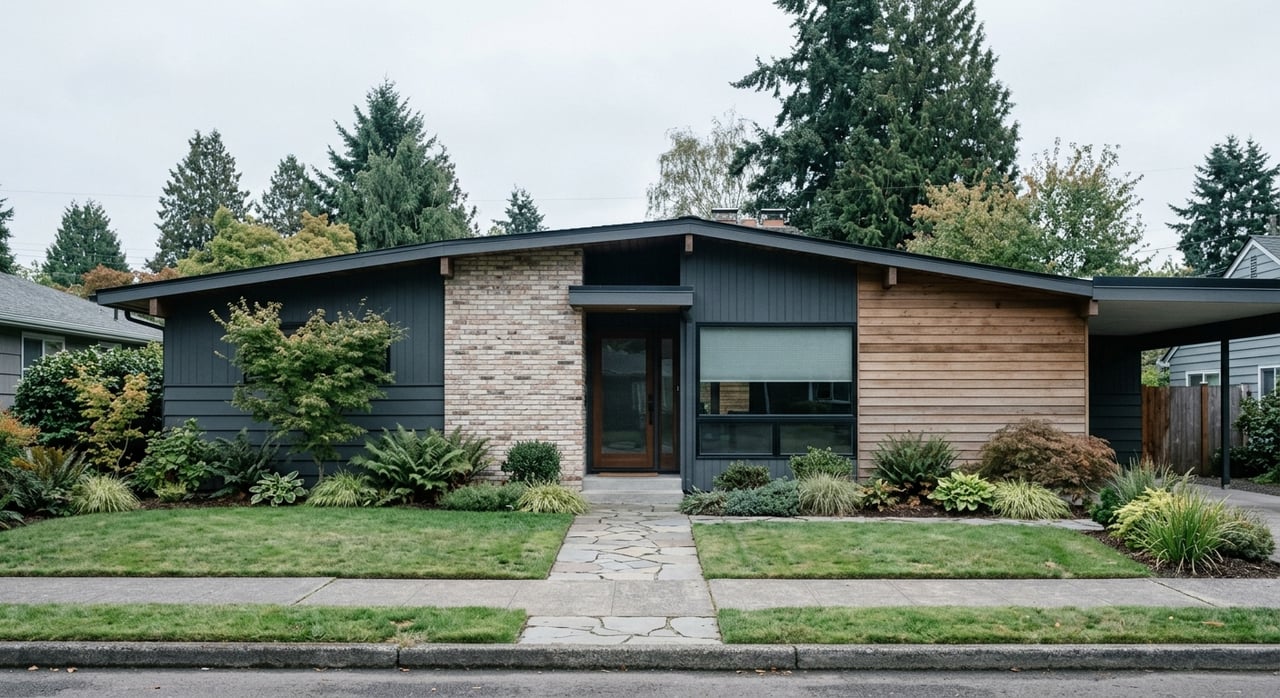
If you picture Shoreline mid-century homes with a little more breathing room, this is often where that image comes from. Over 94% of the housing inventory in West Shoreline is single-family detached housing, and about 64% of homes were built in the 1950s through the 1970s.
Typical homes here include:
The county also reports a median lot size of about 15,000 square feet, which helps explain why many west side homes feel different from more compact parts of Shoreline.
If your search starts with Puget Sound or Olympic views, West Shoreline should be on your radar. King County reports that about 21% of parcels in this area have Puget Sound, Olympic, or territorial views, and there are 41 Puget Sound waterfront parcels.
That does not mean every west side home is a view property, but it does mean this area has the strongest concentration of homes where land value, topography, and outlook shape pricing and buyer interest. For sellers, those details often matter just as much as square footage.
Central Shoreline includes Echo Lake, Meridian Park, and Parkwood. This area acts as the city’s interior suburban core and tends to feel more consistent in its housing stock.
King County describes Central Shoreline as very homogeneous, with over 98% of parcels improved. It also includes civic destinations like Shoreline City Hall and King County District Court, along with the Interurban Trail and shopping and services along Aurora Avenue North.
This is one of the easiest parts of Shoreline to understand if you are looking for a classic, practical housing mix. The typical house here was built between the 1950s and early 1960s, with about 1,400 square feet above grade and roughly 1,700 total square feet.
You will often see:
The area also includes about 146 townhome parcels, which gives buyers a little more variety than in the west side’s more single-family-heavy layout.
Central Shoreline has limited views overall, so buyers are usually focused more on layout, condition, and convenience than on outlook. Echo Lake adds a unique wrinkle, since the assessor notes 17 waterfront parcels, with 16 improved, though the lake itself is described as small with limited recreational amenities.
This part of Shoreline is also important from a planning standpoint. The city and county note that MUR zoning along and around the 145th Street corridor was added to support greater density near the light rail station area, which may continue shaping the mix of housing over time.
East Shoreline includes Ballinger, North City, Ridgecrest, and Briarcrest. If you want the Shoreline area most connected to recent redevelopment and transit-oriented change, this is usually the place to watch.
King County describes East Shoreline as homogeneous and suburban, with strong access to I-5 at NE 145th and NE 175th. The area also has historically strong bus access and is tied closely to Link light rail.
The dominant housing type here is the mid-20th-century ranch-style home. According to the assessor, homes built from 1946 to 1950 account for 34% of the current improved population, and another 25% were built through 1960.
That means many East Shoreline blocks still reflect a very recognizable post-war pattern. In practical terms, buyers often find:
East Shoreline is not a view-driven market. Instead, it stands out for redevelopment tied to light rail and I-5-adjacent properties.
The assessor reports 177 townhome parcels and notes that older single-family homes along I-5 have been purchased and redeveloped into townhomes, condominiums, or apartments. The area is already over 96% developed, so much of the visible change tends to come from infill and replacement rather than large undeveloped tracts.
North City also adds practical convenience, with shopping and services along 15th Avenue NE from NE 170th to NE 180th Street. For buyers who prioritize transportation access and evolving housing choices, that can be an important part of the equation.
If you are trying to match your home search to your daily routine, it helps to think beyond neighborhood names. In Shoreline, home style and commute patterns often go hand in hand.
If your goal is a classic rambler or ranch-style home, you will likely find the strongest concentration in West Shoreline and East Shoreline. West Shoreline offers many mid-century and post-war detached homes on larger lots, while East Shoreline has a strong concentration of ranch-style homes built from the late 1940s through 1960.
Central Shoreline also has many homes from the 1950s and early 1960s, but the typical home there tends to be more about functional suburban consistency than standout lot size or view orientation.
For buyers focused on water or territorial views, West Shoreline is the clearest standout. It has the county’s strongest concentration of view parcels and Puget Sound waterfront in Shoreline.
Central Shoreline has a smaller waterfront niche around Echo Lake, but it is not generally considered a view-driven area. East Shoreline is also not driven by views, so buyers there usually prioritize access, redevelopment, or housing format instead.
If you want a Shoreline pocket with more townhome options or visible redevelopment, East Shoreline stands out first. Its light rail and I-5 access have helped drive recent infill and higher-density projects.
Central Shoreline also offers a notable mix, with townhome parcels and zoning changes near the 145th corridor that support more density. West Shoreline has some transition areas near Aurora Avenue North, but it remains much more dominated by detached single-family housing.
Shoreline sits about 10 miles north of downtown Seattle, and the city is served by Metro Transit, Community Transit, Sound Transit, and regional bus service. Link light rail service at Shoreline North/185th and Shoreline South/148th has also become a major part of how many buyers evaluate location.
West Shoreline leans on access to I-5 and Highway 99, along with bus service. For many households, this part of Shoreline balances a more residential setting with reasonable regional access.
Central Shoreline adds the practical advantage of Aurora Avenue North plus the Interurban Trail. Depending on your routine, that can matter for both driving and local mobility.
East Shoreline is especially relevant for buyers who care about I-5 access and proximity to light rail. The city also notes that the 148th Street pedestrian and bike bridge now under construction is expected to improve safety, reduce travel times, and improve access to regional transit.
The city is also updating its original station-area plans in 2025 and 2026, which reinforces the idea that east and station-adjacent areas may continue to evolve.
If you are buying in Shoreline, understanding these submarkets can save time and sharpen your search. Instead of looking at the city as one broad category, you can focus on the features that matter most to you, whether that is a larger lot, a mid-century floor plan, transit access, or a more premium view setting.
If you are selling, the same neighborhood differences matter when it comes to pricing, marketing, and buyer expectations. A west side view property, a central Shoreline rambler, and an east side townhome-adjacent redevelopment opportunity may all attract very different audiences, even within the same city.
That is where hyper-local guidance makes a real difference. If you want help understanding how your block, home style, and location fit into the bigger Shoreline picture, Ryan Hoff can help you make sense of the details and plan your next move with confidence.
Stay up to date on the latest real estate trends.
My goal is not just to complete a sale, but to make sure my clients are well-educated throughout the process. My clients' needs come first and always making sure that they are satisfied. Providing my knowledge of market conditions and real home prices equips a seller or buyer to make their own decisions without a second thought.